
by Astrid Davies | 14 Jun 2023 | Leadership Matters, Profiling
In a previous blog I wrote about how my company was changing. Well, here’s the promised evolution update.
And it is only a small update, not the finished report. Changing a small company can be fast, when you have staff or use third parties. Changing a small company when you are a solopreneur is a much, much slower process. It is slow for a lot of reasons. In truth, a main reason is lack of time to give the change the headspace it has really needed. It’s also slow because of the options that are open to me. In fact, there is a wealth of options for the future direction of my company. There are actually so many it has been hard to pin down my choices.
However, another reason it has been slow, and more painful than I had bargained-for, is that I am looking to change something that has served me well for seven years. It has been a part of me and, of course, I have been pretty much all of it. That’s always the way with owner-managed businesses which feature the owner as the service lead.
So, what is this evolution update?
I have refocused my core offer. Specifically, I received some helpful feedback about my website. “What do you DO, Astrid?”. When you have taken an age doing and redoing your website, that’s a tough question to be asked. As a result, I looked yet again at the website, and at how I help my clients. By talking it through with people close to me, I have been able to focus down what I do. More than that, I have been able to articulate it a bit more clearly (at least, I think I have – you will have to be the judge of my success or otherwise!). At least, I have been able to analyse what I do and simplify it into clear products and stages.
I told you it was small!
As a matter of fact, it’s really only the website that has changed. Nevertheless, I am reporting back, as my accountability task. The actual services I offer remain the same. The important difference (I hope) is that the emphasis is no longer on a menu of services, but on the problem I am seeking to solve with those services.
Oddly, for a coach, this has been quite hard. It has been hard, because I am in the moment with the clients. It is only after I have helped them achieve the solution they want, that I reflect back and analyse in detail, HOW I did what I did. So, to unpick this and understand it “up front”, has been a challenge. A challenge, however, that I have enjoyed. It hasn’t been hard in any painful sense. It has simply been difficult because it has been new. As with all new things, it is taking a while for it to become comfortable.
And that is where I am right now – wearing in a new way of thinking about my company and my delivery. A bit like new shoes, but without the blisters!
And what will the next evolution update entail?
In truth, I have no idea – yet. I will let this new, “productised”, approach to my company sit and settle for a while. It may not make a blind bit of difference (although I really hope that is not the case!). I am a very straightforward consultant, as my testimonials make clear time and again. That is why I have adopted a straightforward approach to my services – there’s the simplified three-step process for consultancy, and a range of services which are now for sale directly. We shall see where this takes my company. And you can be sure I will report back, when I know more.
If you are interested in finding out more about the services, please go to the “How we help you” tab in the menu above, and hopefully it will all be clear. Hopefully, you will also feel you understand the value of how I could help your organisation. You might even buy something!

by Astrid Davies | 31 May 2023 | Leadership Matters
If you are a young professional in a field such as law, accounting or surveying, you might think that your technical skills and expertise are enough to advance your career. However, the truth is that you also need leadership skills to succeed in today’s volatile, uncertain, complex, and ambiguous market. This is what I call the “career development gap”.
I would argue that leadership skills are not just for senior executives or managers. In fact, I would argue that leadership skills are for anyone who wants to make a positive impact. By influencing others, and driving strategic plans through to delivery in your organization, you’re demonstrating leadership. Leadership skills include communicative, interpretive, affective, and perceptual skills. These enable you to enjoy effective, proactive and collaborative relationships with your peers, clients, and stakeholders.
Leadership research tells us …
Actually, according to research by the Center for Contemporary Leadership , leadership development enables organisations to do the following four things that drive sustained success:
- Improve bottom-line financial performance.
- Attract and retain talent.
- Drive strategy execution.
- Increase success in navigating change.
That’s great, you may be thinking, BUT … what if your organization does not have an in-house leadership development programme? Or if your boss does not see the value of investing in your personal and professional growth?
That’s where Future Leaders Breakfast® networking comes in. Future Leaders Breakfast® networking (FLB®) is a unique opportunity for young professionals like you to network with other like-minded individuals over an informal breakfast.
So far, so standard, you may be thinking. What’s the USP?
What makes FLB® unique is that they focus on supporting you to grow your career. Most networking requires you to know some sports trivia or be prepared to discuss yet another aspect of the weather. That’s not the FLB® way. With us, you get to participate in themed discussions that feature key leadership topics. Through your networking conversations, you will also learn and practice leadership skills such as time management, giving feedback, people reading, and handling your inner critic. If truth be told, these are the skills that help you fill the career development gap faster than exams and post-nominal letters.
Future Leaders Breakfast® networking is not just another networking event. It is a fun and business-focused set of events that will help you grow as a leader and as a person. You will gain insights from experts and peers, share best practices and challenges, and build relationships that will last beyond the breakfast table.
Not only this, but FLB® networking is beneficial for your boss and your organization. By sending you to this event, they will show that they care about your development and well-being. They will also benefit from having a more confident, competent, and connected employee who can contribute to the organisation’s goals and vision. Sounds good, doesn’t it?
So what are you waiting for? Here’s your chance to do something about that career development gap you’re facing. Join Future Leaders Breakfast® networking today and discover the benefits of leadership development for yourself and your career.
Your next opportunity is 13 June for FLB® Portsmouth (in collaboration with University of Portsmouth and Blake Morgan). Please book your ticket and come to find out about the FLB® idea, leadership … and yourself. You’ll be so pleased you did.

by Astrid Davies | 9 May 2023 | Leadership Matters
Tonight I had a chance exchange on social media DMs. Someone (a medical professional, saving lives in our amazing NHS every day) was “discounting”. By this I mean they were deflecting gratitude and praise, reflecting it back on me … but I suspect it’s a common habit and they reflect and deflect as a default setting. They said I was being kind when I expressed gratitude for their efforts with keeping people healthy. That phrase didn’t sit right with me.
Was it “being kind” … or is it doing what I am here to do? ot purely being a coach, or a leadership consultant, but by being a decent human, surely? Actually, all I was doing was telling the truth.
“Discounting” is such a scourge. Self-deprecatory humour is part of the British psyche – we don’t like to blow our own trumpet and are encouraged to look down on those who do. And yet, we are also encouraged to sell our services as a small business. When you ARE that business and those services, it means you have to sell yourself ever day.
In my experience, when people show leadership, we reward and seek to undermine them in equal measure. That is particularly true, when that is in public in the social media circus, showing leadership means the same as putting your head above the proverbial parapet. By doing so, anyone is seen as fair game, open to justified vitriol.
What happened to “being kind”?
“Being kind” is sometimes seen as code for being mealymouthed, going through the motions of being insincerely generous. If not that, then it can be code for “I appreciate you mean well but I can’t be seen to agree with your words”. I suspect this was the case tonight. Being on social media can mean people have a target on their backs for having the temerity to have an opinion. “Keyboard warriors” are everywhere online these days.
Just imagine having to watch your every word and action and emoji, for fear of the likely criticism. I remember that, having been a bullying victim for years at secondary school. It’s not fun.
What should a coach do?
What should a coach do, in this sort of situation? We are taught to let the client lead, but when someone is not a client (and you’re not keen to look like you’re selling AT anyone … that takes us right back to the 3rd paragraph above – it’s not a good luck) what do we do?
Do we offer suggestions, in the hope they won’t be taken as unsolicited advice?
Do we offer supportive words, but really all we’re offering is platitudes?
Or do we offer an observation, which may help a bit of reflection but which doesn’t amount to an open bit of “work”? I went for the last option.
Coaching isn’t “kindness”
This is important – coaching isn’t about kindness. It’s about being supportive, listening to your coachee and helping them to find the answers they seek, through effective questioning and challenge. Obviously, we don’t seek to be UNkind, but it’s not about the bland unquestioning generosity of spirit that “kind” implies. Perhaps that is where the issue lies, for me. I am inferring a meaning that the other person in the DMs may not have meant. They may have meant “unconditionally positive”, or “supportive” or even “nurturing”. However, my professional discipline took over and I confirmed I was not “being kind” but I was saying it how I saw it. And that’s about – and on – me.
Coaching should never be about the coach. Although I am not in a coaching relationship with the other person in the DMs, and it is unlikely I will be, there is still something wrong with my approach. I am inferring, I am projecting my own meaning onto theirs. Unintentionally, I am discounting too, aren’t I?
“Physician, heal thyself”
There’s lots of fodder for reflection in this small exchange. Indeed, that is what I will be doing tonight – reflecting. I will let their words sit with me. I will reflect on their impact and reflect on what that is about for me. And then I will “allow it” as my daughter says so often – I will go along with the expressed gratitude and appreciate that for what it was, a genuine expression of gratitude, with no angle.
So the next time someone says you’re “being kind”, please don’t put an imagined and unwelcome “just” before it. Accept the gratitude and positivity. And keep being kind. Always. It’s the best medicine for a lot of ills.
If this blog triggers some thoughts for you, and you’d like to discuss them, please do get in touch. I would love to discuss your thoughts and what it all means for your leadership journey.

by Astrid Davies | 5 Apr 2023 | Leadership Matters
Charles Darwin’s “theory of evolution” is often misquoted as
“the survival of the fittest”
This is inaccurate and an oversimplification. His theory, together with a contemporary Alfred Russel Wallace, proposed that evolution occurs because of a phenomenon called “natural selection.” This noticed that, in nature, organisms tend to produce more offspring than is required, but some of those offspring do not get to a state in which they can breed. In this way, those which do breed are seen as to have “fitted” their environment best, and so were able to survive, thrive and breed successfully.
In business, this concept has been applied to stigmatise companies which are not wildly successful, arguing they are not “fit” enough for market conditions. This is again a crude oversimplification, applied to business success in a way which often smacks of little other than machismo.
Let’s look at evolution in a business context
What can we gain from revisiting Darwin’s theoretical approach and re-applying it to a business? Here are three ways in which “natural selection” could be useful, if applied with a lighter touch
- It makes sense to check the trading environment. If that changes, then a company’s ability to continue to thrive may change. The pandemic taught us this all over again, at a global scale. So, we need to monitor our marketplace and check our company, or at least its offer, is relevant and has a real potential to thrive.
- Whilst not actually breeding, a company may be able to diversify better in a marketplace where it knows it already belongs. It makes sense to find a range of ways to generate revenue, so long as they fit within your company’s overall business direction. You could use Ansoff’s Matrix to do this. It will give you an exercise to focus your thinking. In this way, you are giving your business a wider customer base, which may help you protect against changes in customer demand.
- In addition to checking the trading environment, it makes sense to check your own company. Are you doing what you set out to do? If so, do you want to still do this? If you are not doing what you set out to do, are you happy about that? You may not be happy about it. If you’re not, what will you do about this? Regular reflective practice by the Board of any company is crucial, to keep the company on track. It may be making money hand-over-fist. However, if it is moving away from, for instance, its original ethical stance, then your company will lose customers. It could also find it more and more difficult to recruit the talent you need to grow. Checking in with your company and its purpose is a crucial way to make sure your company is still fit for purpose. You need to know what your company is for, to know whether it’s successful, after all.
So what am I doing, giving business advice here? It’s not my core purpose in my company – I work with making leaders even more effective through improved Board relationships, behaviours and performance.
The answer is simple. My company is evolving. It no longer focuses on 1:1 personal performance coaching. Instead, we now focus on teams coaching and meeting facilitation. 1:1 executive coaching is a fun by-product of this work, but it is no longer the focal point.
Making changes
This evolution feels massive from within the business, but in truth it probably seems incidental (or even largely irrelevant) to anyone reading this. A bit self-indulgent perhaps? Maybe. The issue is, however, that as a leadership consultant I need to demonstrate self-leadership. If I know that my business has shifted focus, and the business model as a whole needs to follow suit, I really must take actions that I would expect of any client. I must take action, full stop.
My next steps, therefore, are to complete a review of my company’s business model. Once I have tested this with trusted members of my network (in business, the value of your network will always exceed the value of your business!) I will make the necessary changes. What will these changes be? Marketing (website, social media) will feature for certain. Ways of working will too. Maybe the clientele will shift. Maybe I will even attract a whole range of new clients, because my offer is clearer and more targeted, thus making it MUCH easier to understand! A trusted advisor said to me recently, “Make yourself easy to buy from” having had a look over my online presence. Lots on what I do, little on how my help will solve your problems. Rookie error 101.
I will report back once I have taken actions,. Part of this will be for accountability and part will be through shameless marketing content! I hope that the changes, and me having walked my talk about business evolution, will make sense.
If this has struck a chord and you are considering a similar evolutionary process, do please let me know. I would be interested to learn from you, so please comment or get in touch.
by Astrid Davies | 23 Mar 2023 | Diversity of Thought, Leadership Matters
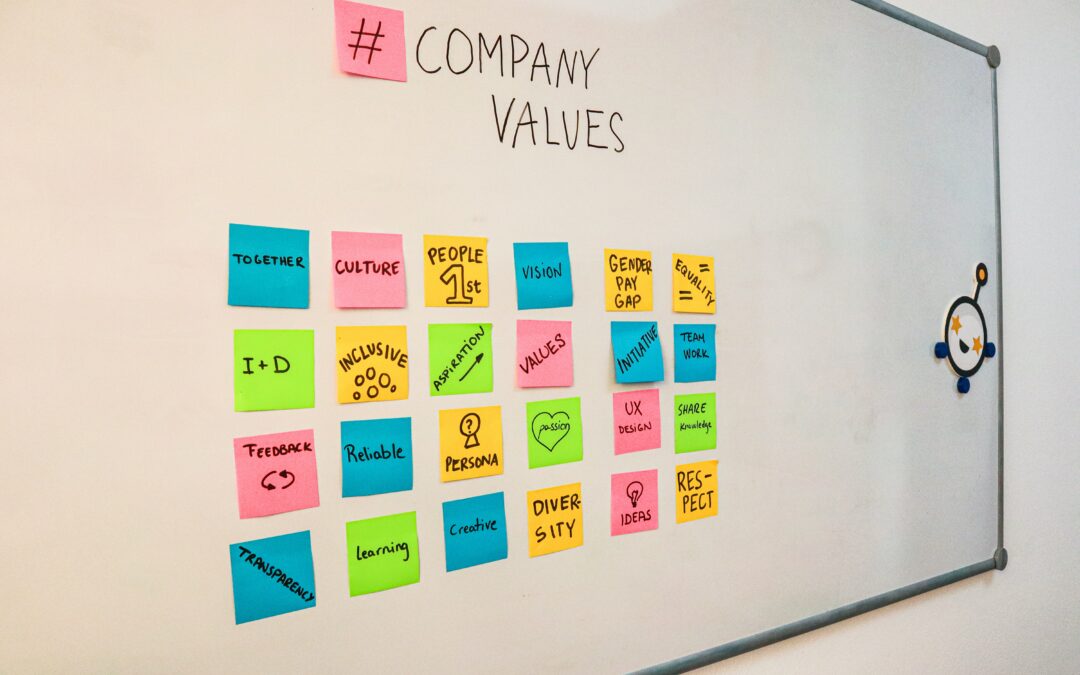
These days, “values” are everything in business. Or at least that is what we are told. The way forward is to be a “purpose-driven business”. It’s all about how much we love to do what we do and how much we convey that to our customers, so they love us more. When your values align with your customers’, that’s when the magic happens.
Or so we’re told.
I run an ethical business. I pride myself on my values being at the core of every single thing I do in my business. In truth, I am probably rather smug about this. It’s the right way to be, after all … isn’t it?
So, imagine my surprise when one of my social media channels was followed by a membership organisation which chooses to feature controversial free-market libertarian thinking (which is different from my personal value and belief systems).
What does this say about “values”?
“Each to their own” you are probably thinking. Or, more bluntly, “Get over yourself”. Either or both is true. However, I was surprised because my feed is pretty transparent on how my values manifest. For example, I do not hide my opposition to continuous and remorseless depletion of natural resources at a global scale. I am also pretty clear that I oppose corruption in public office at the local, national or again global level in any and all forms. While neither of these is inextricably linked to free-market ideology, sadly at least in the Global North there is often a strong intersect. This is regrettable and not part of the ideology, but it does co-incide with the implementation of the ideology and those related to it.
Now, where does this leave me? Confused, is where. The membership organisation is a slick operation, with great imagery and branding, a focus on smart venues and a comfortable lifestyle, inspired by brilliant minds and inspiring huge commercial success. Who wouldn’t be pleased – even a tiny bit – that such a glossy organisation has chosen to follow a company which is, quite purposefully, anything but. There must be something which is hitting home in my messaging and content.
On the other hand, however, I was dismayed that my messaging and content might have been so unclear that an organisation fostering views very different from my own – and in many ways opposite to my own – should consider me a membership target. What was the message that I was putting out ?
Wait a minute …
Let’s be real for a moment. They probably looked up #leadership and followed every account that appeared on the search. It is highly unlikely that I was singled out in any way at all (“Get over yourself” is winning here, isn’t it?!). So, does that make it all OK? I don’t now have to worry?
Not exactly. There is still something very unsettling for me about being followed by any membership organisation. It makes me feel as if I trigger a “fresh meat” response in such outfits. And that is an uncomfortable place for me to be. It takes me out of my comfort zone of content provider and into the domain of the predatory social media hunter-organisations. This is somewhere that I don’t want to be, because it doesn’t really fit with my value systems. My values centre around integrity. It’s clear that such organisations don’t act with integrity. Or is it?
Operating with a value system is a brilliant starting point. Operating with a value system which focuses on doing the right thing, for the right reasons, sounds great. It is, however, full of judgementalism and, again, smugness. I would argue, therefore, that a value system alone is not helpful, because it leads us into unwelcome territory – a divisive “Us Vs Them” mindset. “We” are doing things “right” (whatever that means to individuals – the “each to their own” argument again). Whereas “they” are doing things “wrong” according to our judgements. Our judgements will be based on myriad components, but upbringing and learned behaviour, aspiration and, yes, values, will all feature.
“Values-based” – what does this mean to you?
So the next time you describe your organisation as “values-based” or “purpose-driven”, maybe review the language you use. What judgements does that imply? To what extent are you putting yourself above others, in a fit of judgemental self-righteousness? How else could you communicate your values, without them sounding like a shopping list of marketing-speak?
I for one will be reviewing how I describe my company and our work. It is so important, when working in the leadership space, to avoid taking a particular stance which opposes that of your client.
If we work on the neuroscience presupposition that everyone acts with positive intentions, we MUST believe that others’ values are as valid as our own. The role of anyone in leadership is to enable our teams to do the best they can. Sometimes that may involve uncomfortable discussions, where our personal value systems may not align with those of our clients. It is then that we have to understand our own values. It is up to us to decide whether the mis-alignment is tolerable or intolerable. If it is intolerable, we must continue to behave toward our clients in line with our own values, as well as keeping firmly within professional ethical boundaries. Authenticity is not an excuse for poor behaviour.
I will be considering this as part of reviewing my company during 2023. I intend to report back in some form. If this has raised some issues for you, I would be very happy to discuss them. Perhaps we can share experiences and use our shared perspectives to inform both of our organisations. What would you do in my shoes? Please get in touch and let me know.
Photo by Walls.io on Unsplash
