by Astrid Davies | 1 Sep 2026 | Diversity of Thought, Leadership Matters, Sustainability
Last month, I sat in a room in Lymington, in the New Forest, with around eighty fellow residents of our local area. We were there for something called The People’s Emergency Climate Briefing. If you have not heard of it, I would encourage you to seek it out. The format is deliberately broad: a bit of something for everyone, from food security to immigration, from public health to the macroeconomy. What struck me, though, was not the breadth. It was the urgency and depth of the problem.
And it made me think about my own backyard. Not the New Forest itself, but the businesses that operate in it and around it. Small and medium-sized enterprises. The backbone of the UK economy. The companies that will feel the squeeze of climate disruption long before the policies and regulations catch up.
Climate Change Is Not a “Net Zero” Debate. It Is a Business Continuity Issue.
Let me get something off my chest. The phrase “Net Zero” has become so politically loaded, so sullied by culture wars and vague commitments, that it has lost practical meaning for many business owners. Mention it in a room of SME leaders and you will see eyes glaze over or at least roll. That is understandable. But it is also dangerous.
The briefing in Lymington made something abundantly clear: climate impacts are not a set of future hypothetical threats . They are landing now, in ways that touch every corner of a business. This is not about ideology or any political party. It is simply about operational risk. If your supply chain runs through regions facing increasing drought, flooding, or political instability tied to resource scarcity, your business has a climate exposure risk. You may or may not use that language, but that’s what you’ve got. And it’s a show stopper.
Where Climate Disruption Will Hit SMEs Hardest
Supply Chain Fragility
If you import components, ingredients, or materials from overseas, you are already exposed to the kind of volatility that climate change worsens. A flood in a manufacturing region doesn’t just displace local communities that you might see on TV. It disrupts your lead times. A drought in an agricultural belt does not just make headlines and charity campaigns. It raises your input costs. As SMEs, with our thinner margins and smaller buffers, we feel these shocks more acutely than large corporations with all their diversified sourcing effectively spread-betting their risk.
The question is not whether your supply chain will be disrupted. It is when, and whether you have a plan.
Unstable Foreign Markets
Many SMEs that export or rely on international customers are watching markets become increasingly volatile and unpredictable. Currency fluctuations driven by climate-related economic shocks, shifting trade routes as regions become less habitable, and new carbon border adjustments (international carbon tariffs) are all reshaping the political and economic landscape. The businesses that thrive will be the ones that map these risks early and diversify. That’s something we can all learn from the big corporates.
Health and Safety, and the Rising Cost of Compliance
This is an area that catches people off guard. Climate change will reshape workplace health and safety obligations. Rising working temperatures are already a concern in warehouses, kitchens, and manufacturing floors. Particulate matter from increased wildfire activity (as we have seen to devastating effect in the New Forest recently) is a growing air quality issue which particularly affects the young and the old. Access to clean water, drainage, and flood resilience for commercial premises are all moving up the regulatory agenda. It’s not “making a fuss”, because things will sort themselves out again in time. We don’t have that time as employers.
Each of these brings cost. Retrofitting ventilation, updating risk assessments, ensuring thermal comfort for staff, meeting new emissions reporting requirements. They are coming, and the businesses that prepare now will spend less than those that scramble later.
Why This Is Not Shroud Waving
I want to be clear about the tone here. I am not in the business of frightening fellow business owners into paralysis. The Lymington briefing was sobering, yes, but it was also galvanising. The message was not “give up.” The message was “get ready.”
And here is the good news: the things that make a business resilient to climate disruption are, in most cases, the things that make it a better business anyway. Avoiding waste reduces costs and exposure to resource price spikes. Planning for the future builds confidence with lenders, investors, and customers. Seeking out new markets, particularly those less exposed to climate risk, diversifies revenue and gives you crucial options. Energy efficiency lowers overheads. Supply chain mapping reveals vulnerabilities you might have missed entirely.
These are not sacrifices. They are sound leadership decisions.
A Practical Starting Point for SME Leaders
You do not need a fifty-page sustainability strategy to begin*. You need a clear-eyed assessment of where climate impacts could reach into your business in places you least expect. Start with three questions:
- Where are your supply chain pinch-points? Map your critical inputs. Test what happens if those sources are disrupted for a week, a month, or a whole production cycle.
- Where are your compliance and H&S exposures? Talk to your insurers. Ask about climate-related risk assessments. Look at your workplace environment with fresh eyes (or at least theirs!).
- Where are your growth opportunities? Climate adaptation is creating new markets and opportunities, from retrofit services to resilient logistics. Positioning early is a wise competitive advantage, not a cost.
The Leaders Who Act Now Will Be the Ones Who Thrive
There are People’s Emergency Briefings up and down the UK. Please get to one. The one I attended in Lymington was not a gathering of activists, as some would have you believe. In fact, it was a room full of ordinary people of all ages. The group included parents, carers, politicians, business owners, recognising that the landscape is shifting all around us. The climate does not care about political opinions or cultural arguments. It is already affecting supply chains, markets, workplaces and costs regardless of anything that anyone thinks and wants to spout online.
The SMEs that prosper in the coming decades will be the ones whose leaders refused to bury their heads in the sand now. Not because they are idealists, but because they are pragmatists. They understand that good business means anticipating change, not reacting to it after the damage is done.
I walked out of that briefing in Lymington with a sharper sense of purpose. Not fear. Purpose. And I would encourage every SME owner reading this to find that same sense, before the market decides it for you. It’s a leadership decision and if you want to talk about that, please get in touch as it’s what I do.
*If you would like great support to have a proper sustainability strategy, you can start with a free download from True Horizon. That’s where I got mine!

by Astrid Davies | 24 Jun 2026 | Diversity of Thought, Leadership Matters, Sustainability
Leading a business as a founder or sole director is often romanticised. “Oh, you must have so much freedom!” or “I’d love not having anyone telling me what to do” are frequent comments you may have heard. And yet the psychological reality is almost always far more complex. While the autonomy is undoubtedly unparalleled, the mental weight of every strategic decision rests solely on your shoulders. This unique position can bring with it a specific set of psychological hurdles that can either propel your business forward or lead to stagnation, fear and disappointment. For female founders or sole directors, these challenges are often compounded by a whole range of societal pressures. Add in the delicate balance of managing professional ambition alongside personal identity, let alone any family responsibilities, and you have a real powder keg of issues.
Managing the Rollercoaster of Founder Motivation
One of the most significant challenges is how much your motivation may change. It is rarely a steady climb; instead, it is a series of peaks and troughs. For many women, the struggle to maintain momentum during the quieter periods can feel like a personal failure. In fact, it is actually a natural part of the entrepreneurial journey. When you are the primary driver of your business, your energy levels directly dictate the pace of progress. How many female founders remember this, tho’?
To manage this, it is essential to shift your focus toward celebrating micro-wins. By recognising small, tangible steps of progress, you provide your brain with the necessary feedback to maintain that forward momentum. Instead of only looking up at the highest goals, remember to look at the ground beneath your feet. In fact, regular check-ins with your original vision and purpose can also prevent the sense of drift that often occurs when you are bogged down in the minutiae of daily operations. This alignment ensures that your daily actions remain firmly anchored in your long-term purpose, making even the difficult days feel meaningful. This can make all the difference.
Overcoming Isolation and Sustaining Productivity
There is also a proven connection between your mental state and your actual productivity, and probable success as a result. Isolation can act as a silent drain on your cognitive resources. Without a peer group, a support network or at the very least a trusted sounding board, decision fatigue becomes your constant companion. In turn, this can make even minor tasks feel overwhelming. When you are making every call, every hire, and every strategic choice alone, the mental load can become unsustainable. This is where having access to a trusted confidante, or a trusted network of peers, can make all the difference.
Implementing structured habits can help protect your mental stamina. Specifically, by creating clear boundaries and routines, you can navigate the ambiguity of founder life much more simply. Protecting your mental capacity by automating repetitive tasks is not just about efficiency; it is about preserving the energy you need for high-level strategic work. Refocus your energies on what you’re best at. Focus on your strengths and what your growing business needs.
So, some key elements for maintaining psychological resilience include:
- Celebrating micro-wins to provide instant psychological reinforcement and to underpin momentum.
- Aligning daily tasks with your core vision to prevent purpose drift.
- Utilising automation appropriately, so you reduce the cognitive load of repetitive administration and reserve your bandwidth for the key strategic tasks.
- Scheduling regular peer connection to combat the mental drain of isolation.
- Implementing structured focus blocks to manage decision fatigue and maintain your focus on delivery and growth.
Why Founder Resilience Drives SME Growth
It’s crucial that we recognise that the founder’s psychology is the heartbeat of an SME. Any growing organisation can only grow as far as its leader’s energy and clarity allow. There is a direct correlation between the psychological health of a founder and the scalability of their business. When a founder is navigating burnout or a lack of purpose, the impact ripples through every facet of the company, from innovation to customer retention.
An SME is not merely a collection of assets and processes; it is an extension your vision and drive as its founder. Therefore, investing in your own psychological resilience and leadership development is not a “nice-to-have” that you can keep kicking into the long grass. Instead, you will thrive once you understand it is a fundamental requirement for sustainable growth. To scale a business, you must first scale yourself. This means moving from a state of constant, reactive survival to one of proactive, strategic leadership. And this includes self-leadership as perhaps the most important part.
Navigating this journey alone is perhaps the hardest part of being a founder. Transitioning from being a solo operator to a strategic leader requires more than just hard work; it requires connection, insight, and a community that understands your specific landscape.
If you are a female founder or sole director, and you recognise these challenges in your own journey, you truly do not have to navigate them in isolation. The Acumen Supper Club™ was designed specifically to provide the support, connection, and high-level development that female founders and women sole directors need to thrive. Please visit the Acumen pages on our website to book a chat. This is an opportunity for us to discuss your current position and check your fit for the programme, or perhaps our leadership development services. The most important thing is to ensure it is the right step for your personal growth and your business’s future success.
Image credit: Photo by Ben Blennerhassett on Unsplash
by Astrid Davies | 13 Apr 2026 | Diversity of Thought, Leadership Matters
If you’ve ever wondered whether you should join a local peer mastermind or a local networking group, you’re not alone. The two formats sit side‑by‑side on most event calendars, and the wording can make them sound almost interchangeable. However, beneath the similar‑sounding names lies a very different experience for the people who attend, and different reasons that they attend them. In this post we’ll unpack those differences, comparing the concepts of mastermind Vs networking group. We’ll also highlight why a mastermind – especially the Acumen Supper Club™ – can feel like a hidden‑gem. We hope this will help you decide which setting will give you the kind of growth you’re looking for.
Definitions: the purpose behind the gatherings
A networking group is, at its core, a marketplace of contacts. Members meet, exchange business cards, and aim to expand the circle of people they can call on for introductions, leads or collaborations. The focus is often outward – “Who can I meet today that will help my business grow?”
A mastermind, by contrast, is an inward‑looking, peer‑driven programme. The purpose is not simply to meet new faces but to create a small, trusted cohort that holds each other accountable, shares challenges and celebrates successes. In a mastermind the agenda is driven by the participants’ real‑world problems, not by a pre‑set sales pitch or a speaker series. Think “How can we help one another with this?”
Both are valid – and hold great value to the participants. Acumen’s focus is on female founders, but there are other, mixed, masterminds in your area. As we will see throughout this piece, it all depends on what you’re looking for.
Size and composition
Networking events can be large, ranging from a few dozen to several hundred attendees. The sheer volume offers variety, but it also means you’ll meet many people you’ll never see again. This can put pressure on the time you get to spend speaking to new contacts, Alternatively, you may just love the buzz of a busy, loud, joyous room of strangers and contacts, swapping pleasantries and business cards.
A mastermind deliberately stays intimate – typically between six and twelve members. Acumen’s mastermind group size, for instance, is curated to bring together high‑calibre individuals from diverse sectors, each of whom has already demonstrated a commitment to personal growth and ethical business practice. This small size ensures that every voice is heard and that members quickly become familiar with each other’s strengths and struggles. Add to that the fine dining in venues across the New Forest, and you have the recipe for an intimate, peer-supportive group meeting in an elegant, high-calibre space.
Structure and facilitation
In many large networking gatherings the schedule is loose: a brief welcome, a few ice‑breaker questions, then free mingling. The lack of structure can be liberating, but it also leaves little room for deep discussion. Even in the more structured networking groups, there may be a well-loved format but there’s still no guarantee someone’s not going to hog the pitch time around each table.
Mastermind sessions are carefully facilitated. Each meeting follows a repeatable rhythm – check‑in, theme presentation, Member problem presentation, collective discussion, and an actions accountability recap. The skilled facilitator ensures that conversations stay on track, that every member receives focused attention, and that the group maintains its confidentiality standards.
This can apply to online, hybrid and in-person gatherings. Large networking groups need to use breakout groups (who doesn’t love the abruptness of a Teams breakout room?) to prevent it becoming a melée. Acumen is purposefully styled as a hybrid blend, with a monthly online masterclass on a key business topic, followed by the monthly mastermind where Members explore the problem presentation along Action Learning lines.
The safe, confidential space
One of the most praised aspects of a mastermind is the confidence that what you share stays within the room. Acumen’s mastermind groups operate under a strict confidentiality agreement, allowing members to discuss sensitive strategic dilemmas, financial pressures or personal setbacks without fear of gossip or unwanted sales calls.
Networking groups, especially those that piggyback onto trade shows or expos, tend to be more open‑ended. While most organisers do encourage professionalism, the environment can sometimes feel like a stage for self‑promotion, and the risk of being overheard by potential competitors is higher. It’s also much harder to feel confident to be vulnerable in front of a roomful of people.
Peer support versus sales pitching
Due to their design, masterminds naturally foster peer support. Members act as sounding boards, offering honest “critical friend” feedback, sharing resources, and holding each other to account for meeting agreed‑upon goals. The emphasis is on collective uplift rather than individual selling.
In networking groups, the conversation can drift toward “What do you do?” and “How can we work together?” These questions are both a healthy part of business development. The trick is that there may not be sufficient time to take those initial conversations into deeper, more reflective dialogue. While networking is valuable for lead generation, it rarely provides the same level of sustained accountability that a mastermind guarantees.
The quality of connections
When you walk away from a networking event, you may have a stack of fresh business cards, but the depth of those relationships often remains surface‑level. Follow‑up calls can feel transactional, and it can take months, if not years, for genuine trust to develop. There is much to be gained from a prompt connection on LinkedIn, and there’s always the potential issue of having been slow to follow up (which often can be inferred to mean disinterest, rather than simply you are a busy founder who can’t do it all, all of the time). Networking groups are hugely popular in the Southampton to Bournemouth corridor as a great way to make new contacts.
Conversely, the relationships forged within a mastermind are built on repeated, focused interaction. Over months of meetings, members see each other’s decision‑making processes, witness successes and failures, and learn to anticipate how best to support one another. This depth translates into quicker, more meaningful collaboration when opportunities arise.
The added flavour of Acumen Supper Club™
Acumen’s Supper Club™ is unique. It is more than just a group of contacts meeting for a nice dinner. In fact, it’s an extension of the mastermind ethos into a relaxed, convivial setting. Around a shared table, members discuss industry trends, personal development tips, and life lessons while enjoying a fine dining supper. The confidentiality and the the informal backdrop encourages candid conversation without the baggage of names and identities. This in turn reinforces the trust built during previous mastermind sessions. It’s an example of how Acumen blends structured peer learning with the social bonding that many networking events strive for, but often miss.
Which is right for you?
If your primary goal is to expand your contact list, generate leads and stay visible in your sector, a well‑run networking group will serve you brilliantly. It offers variety, exposure and the occasional serendipitous collaboration. There are many, online, hybrid and in-person, and you can check in with peers about which ones would be the best for you to visit and join.
If, however, you’re seeking a guaranteed space for honest reflection, a group that will push you toward tangible outcomes, and a community of peers who genuinely care about your progress, a mastermind, particularly the Acumen Supper Club™, is likely to be the more advantageous choice. The investment of time and membership fees may be higher, but the return comes in the form of accelerated personal growth, strategic clarity and lifelong allies.
Both masterminds and networking groups have a place in a modern professional’s toolkit. The key distinction lies in intent, structure and the depth of relationship they nurture. Masterminds provide a confidential, peer‑driven environment where high‑calibre individuals can tackle challenges together, free from the sales‑centric chat that can dominate larger networking events. Acumen’s mastermind programme exemplifies how a small, well‑curated group can deliver lasting impact, both in business and in personal fulfilment.
So, the next time you’re weighing an invitation, ask yourself: do I want a broad net of contacts, or a tight circle of trusted allies? The answer will guide you toward the experience that aligns with your ambitions. And if you’re a businesswoman in Hampshire or Dorset, and your weighing-up leads you towards Acumen, please register your interest to join.
by Astrid Davies | 7 Apr 2026 | Diversity of Thought, Leadership Matters
Running a business as a sole director or solo founder can feel both exhilarating and lonely. You make the final call, shoulder every risk, and often lack a “boardroom” of peers who truly understand the nuances of your daily decisions. Our research on women‑focused mastermind groups suggests that a reliable sounding board of expert peers is something they’re missing in the everyday hurly burly. Women have told us they miss the sense of community that working in a bigger organisation brings. They even admit that they miss the challenge and being held accountable for their actions. This was all part of why the Acumen Supper Club™ began.
What Acumen Supper Club™ is – and why
The “What”:
Acumen is a Supper Club and a whole lot more. Organised into 12 monthly modules, this structured programme features themes curated and co-created by the Club’s founding members. The topics range from exit strategies and financial good-to-knows, to neuroscience-inspired resilience for business founders, from crafting a strong personal brand to building a time-efficient AI stack. Each month starts with an hour-long online masterclass to introduce the topic, triggering a discussion and action points.
Later in the month, the Supper Club offers further discussion on those action points, and then one Club member takes the centre stage to present a relevant challenge for an Action Learning style discussion. Acumen Supper Club™ is an exclusive, structured mastermind supper club built specifically for ambitious female founders and sole directors. Membership is limited, and admission is by application only, ensuring a high‑calibre, like‑minded cohort. Each monthly dinner combines:
- Fine‑dining ambience – a relaxed yet smart setting that signals the seriousness of the commitment.
- Action‑Learning format – participants present real challenges, receive immediate peer feedback, and commit to concrete next steps.
- Behavioural insights – facilitated by a trained moderator who draws out hidden assumptions and help re‑frame thinking.
The combined result is an experience that goes far beyond a typical networking group. Members gain not only with fresh ideas, but also a supportive peer group that holds them accountable long after the plates are cleared. This all creates lasting connections and brilliant trust-based relationships.
Acumen currently operates in the New Forest, so it’s easily accessible from Southampton, Bournemouth and Winchester.
The “Why”:
Acumen was founded to create peer support for female founders and sole directors. This is an under-represented segment of business people, so much so that “female founded” is often a descriptor for grant applications as a group which warrants specific focus and support. Being a business founder and owner can be lonely. The business world is often characterised as a male environment. While that doesn’t have to be true, it can make being a founder just that bit more daunting, or frustrating … or downright isolated. Add to that the potential additional duties of caring and other family involvement, and you have a recipe for a struggle. That’s where Acumen comes in, because it provides a safe space, with women who “get it”. We’ve all been there, for some of what you’re experiencing. What sets us apart as female founders is what binds us together at the Acumen Supper Club™.
Why a peer network is a growth engine
Having a peer network can act as a a significant growth accelerator. How? Primarily, it helps with a founder’s resilience. Knowing you are not alone reduces stress and burnout, especially for solo leaders who otherwise face decisions in a vacuum. Another important aspect is the accelerated learning that happens in mastermind settings, where each member’s experience becomes a case study for the whole group. Founders report that hearing diverse perspectives sparks new ideas, offers inspiration and can even prevent costly mistakes. Another benefit to a business of a strong peer negtworking is the potential to cross-refer. Close‑knit groups naturally generate referral partnerships, expanding market reach without the heavy marketing spend.
These benefits can translate directly into sustainable business growth, which is one of our key targets at Acumen.
How to apply to join the Acumen Supper Club™
Our membership is carefully curated to ensure we build true peer networking with like-minded founders. We welcome applications from female founders who have been running a business for at least a couple of years. Ideally, you would have up to four staff in your company. We make this stipulation because with five staff and over you qualify for the Government’s Help to Grow scheme.
Unfortunately, we aren’t geared to include support for start-ups, so if that’s what you need, we are really sorry but Acumen isn’t for you.
And if you’re not sure whether our mastermind format is for you, take a look at our Mentoring for Businesswomen page, because you may well find something there that suits you instead.
So, to apply: complete the application form – tell us about your key business chappenges and how you hope to contribute to Acumen. Next, after you’ve received your Information Pack, you would be invited to join Astrid for an exploratory discovery call, so you can discuss how Acumen would suit you, and answer any questions you may have. Assuming all goes well and you meet the membership criteria, you will receive your personal invitation. You may be invited to meet your fellow group members either online or at the next Supper Club – that would be your choice.
So please take a look at our introductory page, complete the form and access our Information Pack. We’d love for you to join us. So would your future you.
–
by Astrid Davies | 14 May 2025 | Diversity of Thought, Leadership Matters, Sustainability
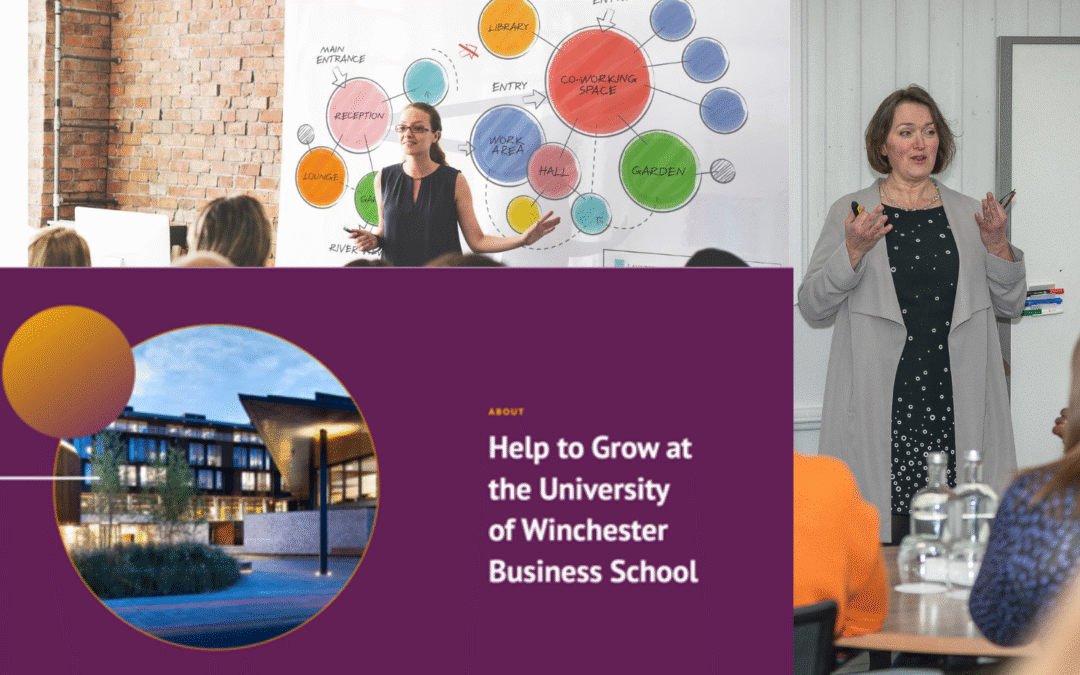
I don’t know about you, but I am noticing that a lot more companies are recognising the value of bringing in external facilitators to support their teams through strategic discussions, workshops, and decision-making processes. As a trained facilitator with extensive experience, including my current role facilitating the Help to Grow programme at University of Winchester, I’ve witnessed firsthand the transformative impact that skilled facilitation can have on organisations.
What Is an External Facilitator?
An external facilitator is an impartial, trained professional who guides groups through structured processes to achieve specific outcomes. Unlike internal facilitators, external facilitators bring a fresh perspective, neutrality, and specialised expertise to the table. In fact, they are adept at managing group dynamics, fostering open communication, and ensuring that meetings are productive and focused.
You might say, “You would say that, wouldn’t you?” And yes, well, that’s true. However, here are ten pretty persuasive reasons why your business could find using a facilitator a very helpful decision.
My Top 10 reasons:
Objectivity and Neutrality: one of the primary benefits of hiring an external facilitator is the objectivity they bring to the table. Internal facilitators may have existing relationships and biases that can influence discussions. In contrast, external facilitators approach each session with a neutral stance, ensuring that all voices are heard and that decisions are made based on merit rather than internal politics.
Expertise and Experience: External facilitators often possess specialised skills and experience in managing group dynamics and facilitating complex discussions. Likewise, their expertise allows them to employ proven techniques to encourage participation, resolve conflicts, and keep discussions on track. Consequently, meetings are not only efficient but also effective in achieving their objectives
Enhanced Group Dynamics: skilled facilitators are adept at managing group dynamics, ensuring that everyone has taken part and that no single voice dominates the conversation. In addition, they create an environment where the room values diverse perspectives, leading to richer discussions and more innovative solutions. This inclusivity actually fosters a sense of ownership and commitment among team members .
Focused and Productive Meetings: external facilitators take the burden of managing the meeting process off internal team members. Therefore, participants are free to focus entirely on content and decision-making. They ensure that meetings are well-structured, time-efficient, and aligned with the organisation’s goals. This leads to more productive sessions and tangible outcomes .
Conflict Resolution: in any group setting, conflicts can arise: External facilitators have had the training to identify and address conflicts constructively, ensuring that disagreements do not derail the group’s progress. By fostering open communication and providing strategies for conflict resolution, facilitators help maintain a positive and collaborative environment.
Driving Innovation and Creativity: facilitators employ creative techniques to stimulate brainstorming and encourage innovative thinking. They challenge assumptions and encourage out-of-the-box thinking. In turn this helps teams explore new ideas and solutions. Above all, this approach is valuable in strategic planning sessions where fresh perspectives are crucial.
Tailored Approaches to Team Needs: external facilitators can customise their approach to suit the specific needs and objectives of the team. Whether the focus is on leadership development, communication skills, or strategic planning, facilitators design sessions that address the unique challenges and goals of the organisation, ensuring relevance and effectiveness.
Building Trust and Psychological Safety: an external facilitator can create a safe space where team members feel comfortable sharing their thoughts and ideas without fear of judgment. This psychological safety is essential for fostering trust through encouraging open communication. In turn, this leads to stronger team cohesion and more effective collaboration.
Supporting Change Management: organisations undergoing change can benefit from the support of an external facilitator. Facilitators help manage the human side of change. They do this by guiding teams through transitions, addressing concerns, and fostering a positive attitude towards new initiatives. This support can ease the change process and increase the likelihood of successful implementation.
Long-Term Impact: the benefits of external facilitation extend beyond individual sessions. By equipping teams with the tools and skills to manage their own discussions and decision-making processes, facilitators contribute to the long-term development of the organisation. This empowerment leads to lasting improvements in team performance and organisational effectiveness .
My Experience as an External Facilitator
Having facilitated numerous workshops and programmes, I have seen the profound impact that skilled facilitation can have on organisations. As I have mentioned, I am delighted to include the Help to Grow: Management programme at University of Winchester’s Business School in this. The Help to Grow:Management programme, designed to support small and medium-sized businesses, provides a structured framework for strategic growth for participant companies. It’s a total privilege to work with the inspirational entrepreneurs that attend the programme. Through Help to Grow, I get to guide participants through a series of sessions that challenge their thinking, encourage collaboration and equip them with the tools to drive their businesses forward. So, yet again, there’s a big benefit to having a discussion facilitated so that the participants can focus on their business. Further, there’s the added benefit that you creat a sense of cohort. There’s few things that can actually beat a shared sense of experience to bring people together.
“Many Reasons Why?” an External Facilitator
Hiring an external facilitator is an investment in your organisation’s success. The objectivity, expertise and specialised skills they bring can transform meetings. Let’s think about this. On the one hand you could keep on with a predictable, routine gathering. On the other, you could hold a dynamic session that drives innovation, resolve conflicts and achieve strategic objectives. Simple decision, right? For instance, you might be planning a strategic workshop. You might want a really good team-building session. Maybe you’re navigating organisational change, and need some neutral help. Whichever you want, an external facilitator can provide the guidance and support needed to unlock your team’s full potential.
In summary, if you’re interested in exploring how external facilitation can benefit your organisation, consider a qualified facilitator. Discuss your specific needs and objectives with them. The right facilitator can make all the difference in achieving your goals and driving long-term success. Trust me, you’ll be so pleased you did. And if you want to speak to me about your needs, please get in touch.

by Astrid Davies | 7 Aug 2024 | Diversity of Thought, Leadership Matters, Sustainability
One of the great privileges of my work is supporting a range of organisations in the UK’s charitable and community sector. All of them have leaders who frequently describe their roles as “a balancing act”. This is because they have to manage a delicate balance between internal management and leadership by paid staff AND their Trustees. They also have to do this while ensuring their charity presents itself strongly in a difficult financial market AND managing how their charity shows up in the local community. This balancing act is essential for ensuring the charities’ sustainability (in all senses), credibility, and impact.
Running the Charity: Internal Management
Effective leadership within the charity sector starts with strong internal management. This involves effective and savvy strategic planning, sound financial management, and efficient operations. Leaders must ensure that the charity’s mission and goals are clear and that all activities align with these objectives. They must also bring paid staff AND volunteers along with them on the journey. When this journey features a big change of direction (or a big change in how the charity is run) this can be a tricky task for the leadership.
Add into that, that many charity leaders are “accidentals”. By this I mean that they took a senior job in a charity because they believed passionately in the purpose. The trouble is, they may not have had the management and leadership training to equip them with all the necessary skills to do the job. Often, the very different nature of charity strategic operations means it attracts people unhappy with (or unsuited to) the corporate world. Charity leaders are a varied lot, but always resourceful and pioneers of “agile” leadership way before it became on-trend. Survival instincts do that to you.
Trustee Behaviour and Responsibilities
Good governance is vital to effective charity operations. It is also a key feature of leadership. Trustees play a crucial role in the leadership of charities. They are responsible for effective governance, which includes ensuring compliance with legal and regulatory requirements, safeguarding the charity’s assets, and setting the strategic direction. This is all set out in the Charity Governance Code and yet is something very few charity trustees and paid leaders appear to know about.
Trustees are often people who have held senior roles in a long working life and are now “giving back” in retirement. For most this means doing good in a way that helps their local community. For most this also means doing good, well. However, for a slim minority, being a Trustee is a badge of office, an instrument of power to use as a bludgeon rather than a ladder to help up others. Sadly, I have encountered some autocratic bullies in local charities. Such people tend to run their organisations as their own personal fiefdom, to pursue theor own personal agenda. That is toxic and has nothing to do with effective leadership. Effective trustees are engaged and knowledgeable leaders, acting with integrity.
Presenting the Charity to the World
How a charity presents itself in the marketplace is vital for attracting donors and volunteers at both the operational and strategic levels (Trustees are volunteers who run a charity). A charity’s market positioning is also key to ensuring it targets, reaches and attracts its beneficiaries. These are the people that the charity has been set up to help and they have to be defined in governance documentation and registered with the Charity Commission in the UK.
It is impossible to have strong and effective market positioning and branding without effective leadership within the charity. Effective marketing involves creating a strong brand identity, clear messaging, and a compelling value proposition. Good luck having that in an organisation that lacks a vision, a clearly communicated sense of shared purpose, and an effective operating model that maximises the impact fundraising can have.
Demonstrating Leadership in the Community: Impact and Engagement
Next in this list of leadership obligations that charity leaders have to juggle and, hopefully, balance, is leadership within the local community. This may involve engaging with community members, whether beneficiaries of the charity or not. It may also involve understanding the community’s varying needs. It is almost certainly going to involve delivering services that have a lasting impact in the community that the charity aims to serve.
There is another angle to this. There are many local and national charities which are advocates for change. On the one hand, leadders might push for change, demonstrating leadership in their own field. On the other, it might be by collaborating with others to increase their impact and effect. The recent marches in London in support of nature, prior to the UK General Election, were an example of this. Many national and global charities came together to remind politicians that wildlife and the natural world need a voice at future political tables. It was a powerful message.
The Balancing Act in action
Charity leaders are looking to the future more than ever before. Not only is this a reflection of the scarcity of money available to them, through reduced public sector spending and a cost of living crisis, but it is also a reflection of the increased reliance we all have on digital tools. Online fundraising, virtual events and the widespread use of Artificial Intelligence to improve donor experience when giving hard-earned cash, are here to stay.
I am pleased to report that charity leaders are also pooling their meagre resources more and better. Small is no longer beautiful, because it splinters the pot available to charities. More charities are seeing the solution to complex issues to be shared, not a solo challenge.
Impact measurement is also something that charities are looking to do. I always advocate the use of Generic Social Outcomes, as I have noted in another blog on this site. However, there are others, such as the sustainability impact indicators associated with BCorp status. It is vital that donors can see their money making a clear difference.
Leaders in the voluntary and community space have a tough job. We rely on them doing that well, every day. We don’t realise how much we rely on them, I suspect. So the next time you think about a local charity as they fundraise and ask for support, please consider helping out. You never know where it might take your leadership journey!
If you would like to explore how I can help your charity with its leadership development, I would be delighted to have a chat. Please book a complimentary strategic conversation and let’s get you started.
