by Astrid Davies | 4 Aug 2017 | Uncategorised
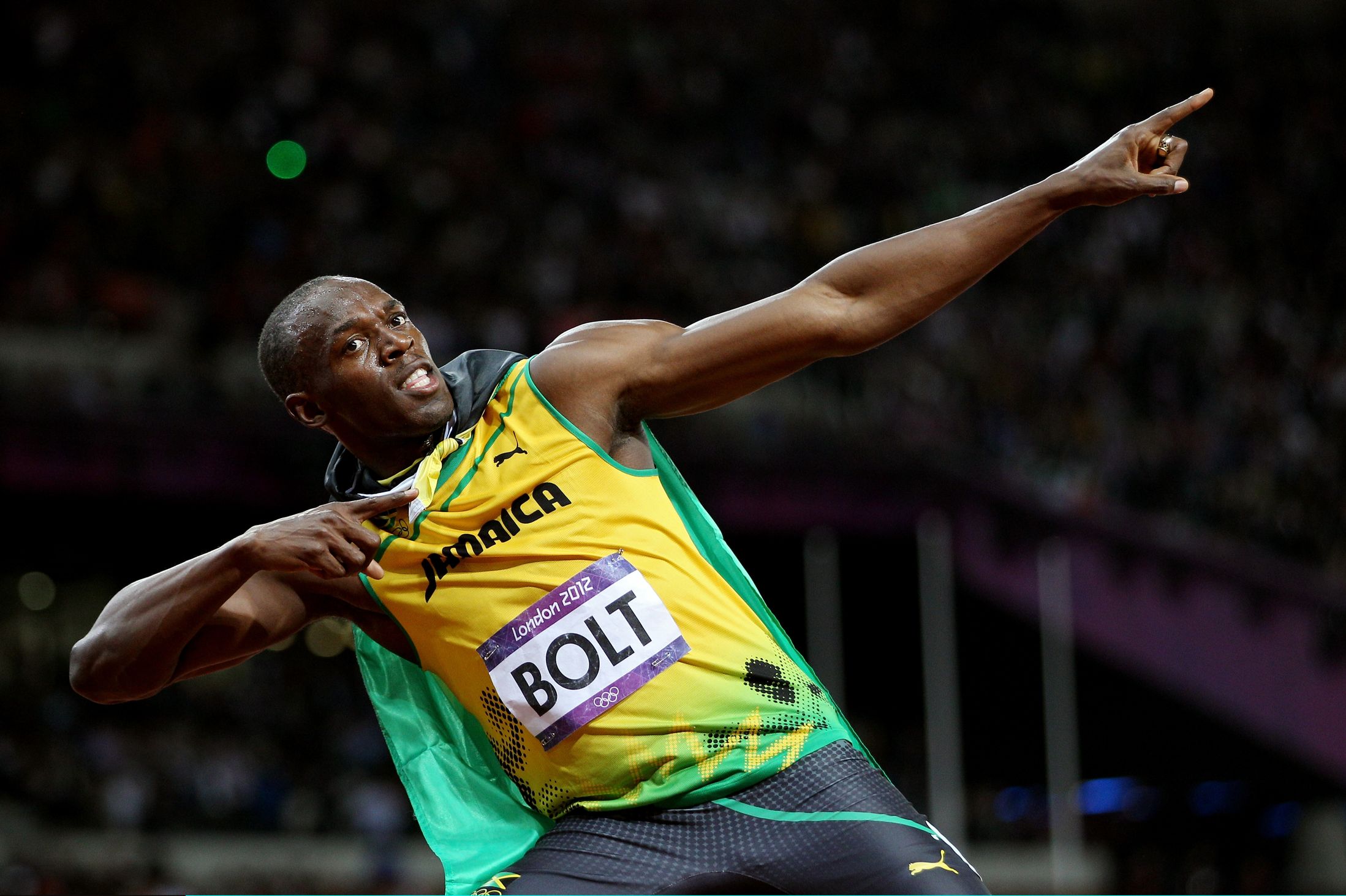
Lucky, lucky me. Tonight I get to see the fastest man on Earth, running in the IAAF World Athletics Championships in London’s former Olympic stadium. For me it’s definitely the first and probably the last time I will ever see the great man.
Miles of comment have been written about Usain Bolt’s retirement. Many of these pieces have been “end of an era” pieces as if they were obituaries. In fact, Usain Bolt is 30 years old (31 later this month). Not bad to retire at 30 eh?!
Usaine Bolt is not, however, “retiring”. He is simply choosing now as the best time, for him to move on from athletics to the next phase on what is already an illustrious career. As Napoleon Hill said, “Don’t wait, the time will never be just right”. So Mr Bolt is deciding to act, because now is as good a time as any and it feels right to him to do so.
What is less well known is that Brendan Foster CBE is also retiring. He will withdraw from commentating on the world of Athletics after the IAAF World Championships this year. A stalwart of the sport, Mr Foster is unlikely to attract the same length and breadth of commentary, certainly beyond the UK’s shores. However, he will be missed just as much by those of us who grew up listening to him (and watching him race, cough).
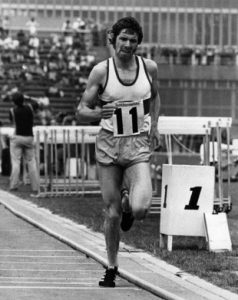 What both these retirements show is that people who know their strengths and are confident in their abilities, sense when it is appropriate to move to new opportunities. If either man were to stay doing what they love just a little bit longer, they might falter, be beaten, make an error. For both men, proud and renowned as experts in what they do, that would be a mistake. They would be revealed as fallible and would open themselves up to the criticism which would swoop on them just as fast as any compliment (faster, probably, knowing the UK media), with the clear implication that they were clinging to greatness and in the process being a bit pathetic.
So what can we learn from both these gentlemen’s decision? First, that it is important to do the best that you can do, every time you do anything. Neither would have achieved what they have achieved, without doing that, every day.
Secondly, when you know your trade and ply it expertly, you will know when you have reached the pinnacle … and therefore you will know in your heart of hearts, when the drop on the other side looms.
The third thing we can learn, however, seems to me to be the key point. When you can see the drop on the other side of success, it takes a leap of faith and huge bravery to decide to stop doing what you love. It requires personal strength and commitment to turn your back on the atmosphere, the environment, the people … the adulation. Even in your workplace, be it an office, a factory or the open air, you may have days when you feel superhuman and that you never want leave. However, you may also have days when you dread that workplace, and you feel as if you have been there too long. Whenever you feel either feeling, it is probably time to think about your next challenge.
And, as both these famous sportsmen show, you don’t have to keep on doing what you do, in the same way but simply for another employer. You may find that sitting down quietly over your summer holidays gives you some time to reflect on what you like, what your are good at and what you want to retain about your job. Do that BEFORE you list the hundreds of downsides! Look at that list. Keep coming back to it. How do the words sound, when you say them to yourself? When you have a list of things you really like about your job, take another look and see what of those is a transferable. In other words, focus in on the things on your list which you could, in fairness, find in another place. It’s those things that you could do, if you put your mind to it, in any other arena. It might not be to play for Man’ United (Mr Bolt’s apparent ambition) but it may well be to use your skills and talents in another setting. What is important to you about holding on to the things that make you unhappy in work? What’s the benefit to you of doing so? Not much, I suspect. So what is stopping you focussing on the best bits of your work, the things that make you feel brilliant, the things that make others say great things to and about you?
As Winston Churchill said, “Now this is not the end. It is not even the beginning of the end. But it is, perhaps, the end of the beginning”. “Retirement” is simply the end of one phase of your life, and the beginning of the next. So is choosing to change your job, or even your career, before an age when retirement is no longer yours to choose. So examine your working life, your work/life balance, your working you. What do you like? What is worth keeping and enjoying but perhaps in new surroundings? What is most important to you in your work? What are the “must haves”? Once you know that, you will be more confident about looking for your next opportunity. And it is an opportunity. It may even be a golden one.
If you would like to discuss any of the issues shown here, please get in touch and let’s discuss your next adventure.

by Astrid Davies | 13 Feb 2017 | Uncategorised
Today is Friday 13th. The day when sailors hesitate to go to sea. The day when the Swedes clear their Christmas trees. What’s so important about this? It evokes tradition, habits, and beliefs. Habits and beliefs are the things that will help you to achieve your goals, but they can also be the things that can get in the way.
We are 13 days into the New Year so how are your Resolutions doing? A year ago, I posted about the benefits of having faith in yourself and resolving to be constant to your ambitions. One year on, I wonder how many of you reading this will have actually done the most recycling you will have done all year – recycling the weight loss / smoking / exercise / new job / see friends more standard Resolutions which many people pick year, after year, after year. Very good to choose to act. Not so good when you don’t.
Habits are crucial in changing behaviours. “Practice makes perfect” for coaches often changes into “practice makes permanent”. In other words, repeat the changed behaviour often enough, frequently enough, to make it stick and feel like it has always been what you do.

Practice when I was a child meant endless hours of piano scales. Dull, cold (unheated room), out of tune piano … pretty grim. Add to that parents who would repeatedly ask me what the tune was, and you can see that this sort of “practice” was not going to get me anywhere meaningful. In other words, there were far too many barriers. Add to that that I really didn’t care whether I could play like Oscar Petersen or not (oh HOW I wish I could now, of course) and you have the demotivational cocktail from hell. Let’s convert this to the work environment. You don’t like the job, and your boss doesn’t thank you or acknowledge when you do a good job – even if it saves the firm money or embarrassment. Now they make you learn a new software package and you have to do it in your own time, just so the firm can make more money… maybe you can see some parallels? So … how are your habits helping you? They aren’t, obviously. That is because you are repeating the negativity, every day, reminding yourself that you are unhappy and unfulfilled.
So, how would it be if you were motivated to do one thing differently? What that could be is up to you. However, the key question is: “What would make you motivated to change?”. Maybe you have found a way to get some perspective and you simply decide that enough is enough. Maybe someone close to you has helped you prioritise your life – sadly this often is triggered by a close personal loss. Maybe you want something (holiday, home etc) which will need you to have more money than you do now, and you want it so much it would make it worth the extra hard work to change, and be more positive about things – anything – everything. That positivity is essential – people are motivated to achieve positive things because, simply put, their brains will make it happen for them if they already believe it to be happening. Self-kidding, really … but it works!
So, having found the motivation, you need to find a way to keep practising your changed behaviour until it becomes part of you. And this is where the beliefs kick in. You need to look at your beliefs – what you value, what you believe to be important, what you believe to be true. What shaped your belief system? What do you hold dear – and what makes those values and beliefs so important to you? How many of them have you actually considered? How many of them are inherited, from family, friends, people you admire? It’s important to understand what is shaping how you attach value to thoughts and actions. Without that understanding, you will find it more difficult to remember to repeat the changed behaviour. Without that, you may not actually find it easy to want to change. And if you don’t want to change, you won’t.
When we look at the beliefs around today’s date – “Friday 13th” – they conjure up negative imagery. There’s even a horror movie with the theme. However, despite people attaching negative connotations to the date, they all know that, really, there isn’t any substance to that set of thoughts. They are superstitions. And superstitions are, generally, thoughts that we know, deep down, aren’t guaranteed to be true. The same goes for your own negative beliefs. Henry Ford (among others) is credited with the phrase “If you think you can, and you think you can’t, you’re right”. In other words, your thoughts have a huge influence on how you act, and how you view your actions. So, it stands to reason that thinking you can’t will result in failure. “I can’t go for promotion because ….”, “I am always going to stay fat …”. Hardly inspiring and motivational, are they? Yet if we turn them around, and start those thoughts in a positive vein, they are a bit different. “I can go for promotion, and there are some steps I need to take to get there”, “I am losing weight and if I want to lose it faster, I can …[take more exercise etc]”.
Turning negatives into positives is a great way to start to challenge your own long-held beliefs. It can feel a bit like a pointless parlour game. However, if you KEEP challenging the long held negatives with relentless positivity (the new habit), it will start to feel real, true and very, very doable. It takes time and effort, but is really worth it. The sense of satisfaction that comes from taking action based on your own positive choices takes some beating, I promise you.
Maybe you have read this and think “Hhmmm – but I can’t”. If you did that, please go to the top and read it again … because YOU CAN. You may not get the Seychelles beach or the loft apartment straight off, but you can move towards having them – by changing your habits and challenging your negative beliefs/superstitions.
Maybe you have read this and think “Hhmmm – I would like to, but I don’t know where to start”. In that case, simply get in touch to chat through your options with a professional experienced coach. You have nothing to lose but a few clicks on a website and maybe a brief Skype chat, and oh so very much to gain.

by Astrid Davies | 9 Feb 2017 | Uncategorised
The past few weeks have been challenging for the green movement around the world, because of one man’s actions. He won’t be named in this article, because publicity feeds his actions. I think, however, you know who I mean … This is a short piece to remind colleagues working so hard, keeping our planet alive and well, that this is too important to be wiped away by an ego or two, and that, by keeping making clear progress, every day, we will prevail.
You may be feeling that you need to make a stand against what is happening to environmental policymaking. You may be feeling hopeless when you see “dirty” projects re-introduced by force. These are both valid points of view, but perhaps the most important consideration is the end-game. What will those emotions do to help you, to help the environmental agenda to flourish? For many, anger and indignation move very fast from a force for good, to become a destructive force which blinds us to the wider implications. On the other hand, feelings of powerlessness remove our confidence and belief that “we can”, after all. Neither of these stances is actually productive or helpful, no matter how understandable it is.
There is a fable that the Scottish King, Robert the Bruce, watched a spider repeatedly fail to climb a thread and build a web. He then watched as, through dogged perseverance, the spider built a web, a means of survival, and a thing of beauty. This is often used as a metaphor, alongside the saying “If at first you don’t succeed, try, try again”. What this doesn’t take into account, however, is whether Robert the Bruce was hampering the spider, moving its silk, damaging its web building. For it is easy to be daunted when your hard work and good intentions can be cast aside with apparently cavalier disregard, or even actively hampered or prevented.

While you are reading this, you may find yourself feeling a little sad, deflated, irritated even. These things are SO big and SO important, what does a silly fable about an arachnid have to do with it? It’s simple. It’s an illustration of the pure power of keeping on, keeping on. There is a movement around the world, moving toward clean energy, clean fuels, cleaner ways of living. That is because humans need that to survive. Air quality and toxin-related mortality are big news driving big self-interested changes – the world’s politicians just don’t shout about it. This comes about from evidence-based research, data, scientific fact. Look at China if you doubt this works. Even deniers have come to accept the facts (and no I don’t mean the “alternative” kind) – the trouble is that they aren’t always taken seriously by a minority. And that is surely the point – they ARE a minority. OK they are a powerful minority, but their power will be transitory. “All things must pass” and, when they do, those of us backing green will still be here, working away to prove the benefits of clean, sustainable fuels and materials for our everyday lives. We will still be here, harnessing solar. We will still be here, rejecting packaging at the point of sale so retailers have to find a way to cope with it. We will still be here, proving that humans CAN make a collective change for good. And that’s the small-beer consumer angle. Those of you reading this involved in cutting-edge clean tech, clean energy and the wider sustainability industry know how much you are doing and how big a difference you are making. Believe it. You really are, and billions of us are grateful that you do.
So, when it gets touch, what CAN you DO, to help yourself to keep on, keeping on? First of all, you can make the choice to keep on. Sounds simple, doesn’t it? However, deciding to keep doing something which is being challenged and undermined is not always easy. It is always brave. ‘though. So make the decision to keep on with the support you give to green in all its guises. Choose bravery.
Next, you can focus on how that bravery, your green choices, make you feel. Focus on the benefits your choices bring to you and those you care about, right now. Don’t think about the distant future when you are considering your own motivation. Deal in the “now”. What is it that is making you burn with energy and passion? What is it that you are working for? What is so important about that to you, right now? Really identify what it is that motivates you, and appreciate quite how much you want to achieve success in your aims. You may want to consider how this is shaping your life goals, and really decide what your realistic life goals would be like when you have achieved them. How would that success be for you?
A key thing that we coaches always work with our clients to do is write it all down. Journal. Keep a log. Keep an online diary. Draw a mindmap. Build a visionboard. Whatever it takes for you to record your passion and what motivates you, so that it can keep motivating you, every day. Share it if it would help to motivate and focus you. Use it at home, use it at work. Dr Stephen R Covey taught us “Start with the end in mind”, so always keep your aims in focus. That way, you always know that you are heading in the right direction, whatever you do.
When you have written down or created your record of what is driving you on, the obvious (but often forgotten) next crucial element, is to look at it. Every day. If you need to change your life goals and motivations a little, then go ahead. Just don’t forget to write down a new log / diary note / mindmap / visionboard. Refer to it often and take a moment to reconnect with what you are about, what you are doing, and why. That moment of reflection in every day is what sets leaders and successful people apart. It is what enables them to drive on, despite the rocks in the road, toward their goals because they believe, they truly know, that they will prevail. This is how you will prevail.
There are a lot of additional steps that could be thrown into the mix, but this simple daily discipline will keep you focused on what is driving you on, and the benefit of that for yourself, and those around you. It is wonderful to have your motivation as a philanthropic, arms-wide-open, world goal. It simply isn’t deliverable on a small scale, every day. You may be working towards that massive goal, but remember to take every day as your brave step toward success. Small steps forward are worth every setback. You know what forward feels like. You know what you will see when you achieve your personal milestone. By reading this, you also have a handy reminder that knowing and feeling are all great, but actually doing is crucial too – and then reviewing the “do”. Regular practice makes a habit. Make purposeful progress your habit, by keeping on, keeping on every day.
I hope that this simple routine outline has been helpful as a reminder that small progress, even in the face of a lot of opposing “noise”, is still progress, is still valid, and is really helping. We will all get there, because we have to. Know that your work is prized by those of us who want a decent world for our children and their children. Thank you for all you do.

by Astrid Davies | 9 Dec 2016 | Uncategorised
Christmas is traditionally a time of good cheer, generosity of spirit and celebration. Sadly, for some people, it is also the only real time they spend, thinking about their life and whether it is turning out as they want. This time of reflection can have a damaging impact on families, relationships and people’s mental wellbeing. Did you know there is a padre patrol on Beachy Head on New Year’s Day? The Christmas period sees a rise in suicides, because people can’t face another year of the same old crud, that they feel powerless to change.
It doesn’t have to be that way
Thinking about your life and how it is turning out might not be a barrel of laughs. However, there are a lot of options, between getting a bit grumpy over the Christmas break, and taking the devastating decision to end it all.
For many people, the problem is one of overwhelm – everything is a bit out of focus. It all seems to be rushing by, with no time to enjoy the good things, to enjoy the fruits of all their hard work. When you boil that down, it often comes down to control … people feel out of control, lacking clarity about what they want, unable to see the path ahead. Some of my clients present with this form of overwhelm – not “stopping to smell the roses” as one put it. What I work with them to achieve, is regaining some control.
Control comes first with the decision that things are so bad, you really REALLY want to change something. You might not know what, but you know you need to change something … anything … so that your circumstances don’t repeat themselves for yet another year. How to do that? Easy to say, harder to do … but very possible. You decide to change a thing. You choose a single thing, that is completely within your control to change, and you decide to change it. You decide how, when and where you will change it. You decide what is the most important thing about changing it. You decide who else needs to know about the change. You decide where that change will take you. And then? Yep – you change it. And then you decide to keep on changing it, until it works and things feel better. And you also decide to notice what else happens when you change it, so that you can really recognise when your change has been successful, and you have taken back a bit of that lost control.
The choice you take, the “path” you choose, may not be straight, but wind through your life, as if through a landscape. Choose whether that matters or not. Choose where it winds, where it takes a detour. Choose where it starts, choose where it stops. All these choices re-establish your control over the world around you. As Dr Covey taught us, “Start with the End in Mind” … know where you are going! So long as you are deciding the path route, while deciding where it should be going, you will be pleased with what your progress shows you.
Some people are impatient with the bends in the road, and expect to arrive at their perfect change, to make their perfect future, immediately. Life isn’t like that for most of us – there is no “pot of gold”. However, when you make the choice to take action, you are taking a big decision, potentially one of the most important of your life. Take it carefully but also enjoy it, because you are doing something wonderful for yourself – at long last.
So how will you use your thinking time this Christmas?
If you are lucky enough to be able to have a family Christmastime, even if you do not celebrate the faith behind the festival, please take a moment to be thankful. Remember that, no matter how irritating work colleagues and their emails are, you still have a job, a home, a family … and that your hard work keeps that so. When you work hard, who else do you help? How can you help people more in the coming year, while still helping yourself?
Deciding to reflect on how to move on with your life can be exciting, challenging and fun. The trick to making a fun choice, even in the context of difficult circumstances, is to choose to make a positive change. Choose something, rather than choose to avoid or move away from something. Choose a new job, rather than decide to leave your current one. Choose to take up a pastime, rather than choose to stop sitting around at home on your own. Whatever you choose, make the choice a positive one. Enjoy taking some time to choose something, a specific thing, that you can choose to change, and where that change will really help you. It’s all allowed, for the change to be fun, and to be only for you. Purely by being happier and more in control, you will improve the lot of everyone around you. You can help a heap of people, purely by being happier around them. When you break it down, it actually gets easier and easier to choose to do something. The smaller the something, the easier it can get. What is really stopping you from making that choice to change?
So when you have some quiet time this Christmas, give yourself a brilliant Christmas present and take some time to choose one small thing to change for the better. Work out how the change will happen, and determine a timescale in which to do it. When you make the change, and notice its impact, celebrate.
Choose a different path, in some way, and watch how things change for the better. Feel that regained control. Enjoy that extra focus. Oh – and try not to wait to next Christmas to do it all over again!
If some of the issues raised in this post have resonated with you, please get in touch, to find out how you too could regain your control and get that focus back.
Opening image of Christmas lights: © Tomasz Tulik | Dreamstime Stock Photos royalty free download
Uncredited images courtesy of Pixabay
by Astrid Davies | 2 Dec 2016 | Uncategorised
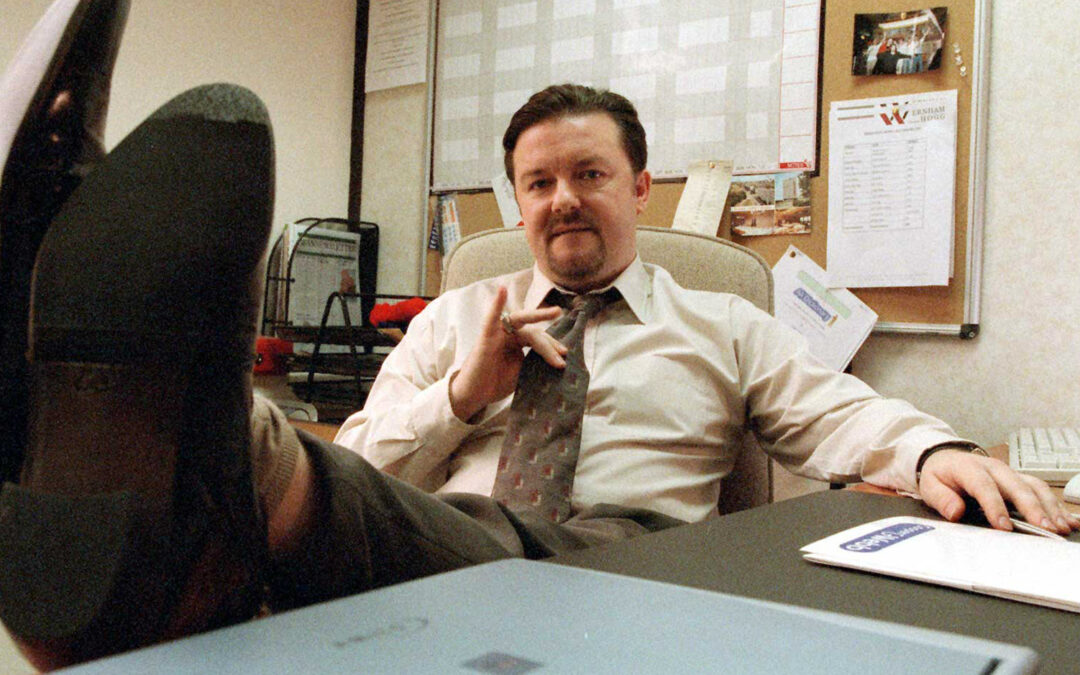
The David Brent caricature of leadership is outdated and irrelevant, right? Sadly, wrong. There are thousands of DBs out there, ridiculed / pitied / distrusted by their teams. Are you one of them?
Definitions of management and leadership – and the difference between them – are everywhere in business – in organisations, in the trade press, sometimes even at the coffee machine. Managers are on the one hand encouraged to measure, monitor, evaluate … and then are often implicitly criticised for being “bean-counters”, only valuing what they can measure. Leaders, on the other hand, are often characterised as go-getters, valiant visionaries, nurturing their teams while driving profits ever upwards. In fact, everyone is likely to be perceived as somewhere on the vast spectrum between these two extremes. The trick is to remember who is doing the perceiving.
In my experience, teams value someone who can combine both roles with a lightness of touch that still enables individuality to be recognised, and a corporate value system to be observed. How do I know? I asked them. I have always asked my teams, my direct reports, what they needed of me, for them to give of their best. I worked hard not to leave this to the annual performance review, but sometimes that was how it played out. I always asked, though. Always. Why? Because I lack the power of mind-reading.
One of the many ways in which the brilliant Ricky Gervais satirises the inadequacies of his character Brent, is to have him assume that he (Brent) automatically knows what his team think, feel, want. Assumption is the enemy of effective management and is a real blocker for effective leadership. Anyone in a supervisory position, who assumes without checking, is working on untested data, which masquerade as “facts” because they are believed to be true by the supervisor, and sometimes sold on up the hierarchy without any basis in truth. So how do you check your facts? You can measure your team performance according to agreed Key Performance Indicators, targets and incentive schemes. You can choose to measure the number of complaints received (always a perverse incentive in my view). You can choose to measure the hours people work (another unhealthy way to monitor people, in my view, because it breeds an unproductive long-hours culture which has more to do with testosterone than it does with bottom-line productivity). So there are a heap of ways in which you can build your wall of “metrics” – things to be measured. That is not the end of it, however. You can still measure, if that pleases you, but why stop at the tick box items? Why not measure the number of times your team exchange compliments, congratulating one another on a job well done? Why not measure the number of times you do that?! Why not measure the number of customer compliments? You may not get many … but how do you go about making that easy? Measurement doesn’t have to be about negatives. Turn your thinking around, and see how you can use measurement and monitoring to good effect. Here’s an idea – how about asking your team?
What else will your team want of their leader? They will want you to manage them – ensure they are paid, that they are kept safe, that they are insured while at work, that they are given work and are free to do that work. That should all be a set of givens, but sadly even those basics aren’t always the case (as seen recently with major high street retailers having staff give birth on the shop floor for lack of a decent break regime). So you need to assume that you do the basics and do them right, the first time, every time. Oh and always, ALWAYS do what you say you are going to do, when you say you are going to do it. If you can’t then you need to explain why that didn’t happen. Accountability and shouldering responsibility are crucial to effective management and leadership. If that makes you feel queasy, then there’s a whiff of The Office about that.
What else will your team want? They may want inspiration. No-one can raise themselves to “go the extra mile” every single day … even the most motivated of us will want someone’s encouragement along the way. Even if we don’t know we want it, we will all welcome it, if it is genuinely meant and delivered in a sincere way. How your team wants to receive that inspiration is up to them … so … (you may be spotting a theme here) … ask! Find out what helps your team go above and beyond. If it is loyalty to their employing brand, that may be because of brand recognition for a premium brand, but it may also be that they feel trusted by the employer, they feel recognised, appreciated and valued. This is worth thinking about – and thinking about deeply. What do you do, to enable your team to feel inspired? What inspires you? Remember – what inspires you may not inspire others … don’t assume.
Teams often value leaders that will fight their corner, taking their part against customers, “Management”, the world. That’s fine, so long as the leader involved maintains sufficient distance from the team that, when things go wrong and performance isn’t at its best, the leader is still able to help his team improve by reinforcing standards, expectations and targets. All too often, people in a supervisory position will fall into the “one of the lads” trap … one to watch at the upcoming Christmas Party season … and then find it very difficult to take a stance against under-performance or disciplinary matters. This is a fine line to tread, particularly for newly-promoted managers and leaders, keen to make their mark. Too chummy with the team, and you can’t be effective when disciplining “a mate”; too aloof and you lose all respect because you have become “one of them”, where “them” is anyone at all, who isn’t one of “us”. And that is a whole world of ill-defined pain.
My experiences tells me that modelling positive work behaviours (“walking the talk”) works best. There will be the obvious positives, such as inter-personal respect and courtesy, maybe remembering birthdays, certainly saying “please” when a task is allocated and “thank you” when it is done. Such things are a sign of strength. [If you have reached this far and still think they are a sign of weakness in work and elsewhere, you ARE David Brent come back to Earth. ] There are also the subtler positives, such as managing your own work/life balance so that you perform your tasks in standard work hours, or managing stress with a calm considered response, or taking the time to seek the perceived truths from both sides of a dispute. How will you know how to find out what works for your team? Yep … ask!
Your team will want someone to provide direction, support and information that help them to do their jobs well. How well do you match up? How will you improve? One of the ways a large number of the most successful executives use, is finding themselves a coach and/or a mentor, to help them learn the ropes. And that goes for the most senior and experienced executives … there is a saying that “you can’t not learn, so long as you are alive”. Double-negatives aside, this has a lot of truth in it. Even the most experienced manager/leader can always learn, hone their craft, or sharpen the saw, as Covey exhorted us all to do as his Habit #7. Asking questions is a crucial part of this. Coaching can be used as a leadership technique. It is also the premier personal development tool for aspiring leaders, particularly helping to develop your own leadership style, formed by reflection, consideration of your own value systems, and how your behaviours can and perhaps need to change, to improve the choices you could be making.
You may have found, as you have been reading this, that you want to find out more, so you can be the best leader you can be. If that is the case, please feel free to get in touch, and we can discuss how you can be the leader your team want you to be. Your team will thank you for it. So will you.
Image (c) BBC – downloadable wallpaper from The Office series


