
Lucky, lucky me. Tonight I get to see the fastest man on Earth, running in the IAAF World Athletics Championships in London’s former Olympic stadium. For me it’s definitely the first and probably the last time I will ever see the great man.
Miles of comment have been written about Usain Bolt’s retirement. Many of these pieces have been “end of an era” pieces as if they were obituaries. In fact, Usain Bolt is 30 years old (31 later this month). Not bad to retire at 30 eh?!
Usaine Bolt is not, however, “retiring”. He is simply choosing now as the best time, for him to move on from athletics to the next phase on what is already an illustrious career. As Napoleon Hill said, “Don’t wait, the time will never be just right”. So Mr Bolt is deciding to act, because now is as good a time as any and it feels right to him to do so.
What is less well known is that Brendan Foster CBE is also retiring. He will withdraw from commentating on the world of Athletics after the IAAF World Championships this year. A stalwart of the sport, Mr Foster is unlikely to attract the same length and breadth of commentary, certainly beyond the UK’s shores. However, he will be missed just as much by those of us who grew up listening to him (and watching him race, cough).
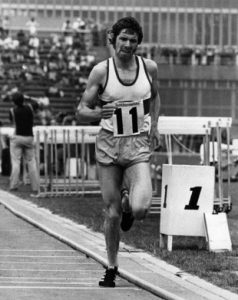 What both these retirements show is that people who know their strengths and are confident in their abilities, sense when it is appropriate to move to new opportunities. If either man were to stay doing what they love just a little bit longer, they might falter, be beaten, make an error. For both men, proud and renowned as experts in what they do, that would be a mistake. They would be revealed as fallible and would open themselves up to the criticism which would swoop on them just as fast as any compliment (faster, probably, knowing the UK media), with the clear implication that they were clinging to greatness and in the process being a bit pathetic.
So what can we learn from both these gentlemen’s decision? First, that it is important to do the best that you can do, every time you do anything. Neither would have achieved what they have achieved, without doing that, every day.
Secondly, when you know your trade and ply it expertly, you will know when you have reached the pinnacle … and therefore you will know in your heart of hearts, when the drop on the other side looms.
The third thing we can learn, however, seems to me to be the key point. When you can see the drop on the other side of success, it takes a leap of faith and huge bravery to decide to stop doing what you love. It requires personal strength and commitment to turn your back on the atmosphere, the environment, the people … the adulation. Even in your workplace, be it an office, a factory or the open air, you may have days when you feel superhuman and that you never want leave. However, you may also have days when you dread that workplace, and you feel as if you have been there too long. Whenever you feel either feeling, it is probably time to think about your next challenge.
And, as both these famous sportsmen show, you don’t have to keep on doing what you do, in the same way but simply for another employer. You may find that sitting down quietly over your summer holidays gives you some time to reflect on what you like, what your are good at and what you want to retain about your job. Do that BEFORE you list the hundreds of downsides! Look at that list. Keep coming back to it. How do the words sound, when you say them to yourself? When you have a list of things you really like about your job, take another look and see what of those is a transferable. In other words, focus in on the things on your list which you could, in fairness, find in another place. It’s those things that you could do, if you put your mind to it, in any other arena. It might not be to play for Man’ United (Mr Bolt’s apparent ambition) but it may well be to use your skills and talents in another setting. What is important to you about holding on to the things that make you unhappy in work? What’s the benefit to you of doing so? Not much, I suspect. So what is stopping you focussing on the best bits of your work, the things that make you feel brilliant, the things that make others say great things to and about you?
As Winston Churchill said, “Now this is not the end. It is not even the beginning of the end. But it is, perhaps, the end of the beginning”. “Retirement” is simply the end of one phase of your life, and the beginning of the next. So is choosing to change your job, or even your career, before an age when retirement is no longer yours to choose. So examine your working life, your work/life balance, your working you. What do you like? What is worth keeping and enjoying but perhaps in new surroundings? What is most important to you in your work? What are the “must haves”? Once you know that, you will be more confident about looking for your next opportunity. And it is an opportunity. It may even be a golden one.
If you would like to discuss any of the issues shown here, please get in touch and let’s discuss your next adventure.